



[토마스의 그림이야기 63] 차 마시는 가족 -리처드 콜린
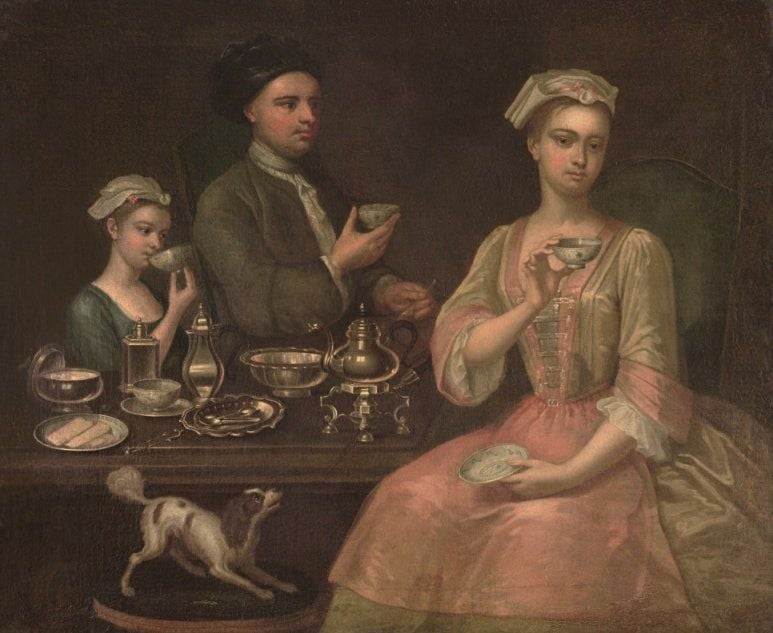
이 작품은 ‘리처드 코린’이라는, 비교적 잘 알려지지 않은 18세기 영국 화가의 그림이다. 그는 차(茶, tea)를 마시는 귀족들의 모습을 담은 여러 작품을 남겼다. 1727년에 제작된 이 그림 〈차를 마시는 가족〉은 유럽에서 절대왕정과 귀족 문화가 절정에 이르렀던 시기의 분위기를 잘 보여주는 작품이다.
그림 속에는 고요하고 정적인 분위기 속에서 잘 차려진 테이블 위의 다기 세트를 중심으로 한 가족이 둘러앉아 있다. 오른편에는 황색의 화려한 색조로 강조된 부인이 정면을 향해 우리를 응시하고 있으며, 그녀와 뒤편의 남편 사이에는 V자 형태의 공간이 남겨져 있다. 이 때문에 관람자의 시선은 자연스럽게 남편과 딸 앞에 놓인 식탁의 다양한 식기들로 향하게 된다.
테이블 위의 식기들은 서로 평행한 구도를 이루며, 오른편 부인의 황색 톤과 조화를 이루어 안정적이고 균형 잡힌 화면 구성을 만들어 낸다. 이러한 안정된 구도 속에서 가장 먼저 눈길을 끄는 것은 단호한 표정으로 관람자를 바라보고 있는 부인의 시선과 자세이다.
부인의 왼손은 찻잔 받침을 쥔 채 무릎 위에 놓여 있지만, 오른손은 찻잔을 들고 있어 마치 관람자에게 찻잔을 올바르게 드는 방법을 보여주는 듯하다. 이에 반해 뒤편의 남편은 아직 다소 어색한 자세로 찻잔을 들고 부인을 바라보며 차 마시는 법을 배우는 모습처럼 보인다.
맨 왼쪽의 딸 역시 아버지와 마찬가지로 어머니를 바라보고 있지만, 이미 교양 있는 어머니에게 배운 방식을 완전히 익힌 듯 능숙하게 찻잔을 들고 차를 마신다. 이처럼 이 시기를 전후해 제작된 차 마시는 장면의 그림들은 대개 가정이나 모임에서 함께 차를 마시는 모습을 묘사하지만, 동시에 계몽주의 시대의 교훈적 지침서와 같은 역할을 하기도 했다.
리처드 코린은 차를 마시는 자세와 찻잔을 쥐는 방식을 매우 정확하게 묘사함으로써 등장인물의 교양과 품격을 표현하려 했다. 특히 찻잔을 잡은 손의 모습을 보면 손의 열기가 잔에 전달되지 않도록 조심스럽게 잡은 세심한 표현이 눈에 띈다. 이러한 세밀하고 규범적인 묘사는 이후 시민혁명을 거치고 19세기에 이르면서 점차 다양한 표현 방식으로 변화하게 된다.
영국은 커피보다 홍차를 더 즐겨 마시는 나라로 알려져 있다. 영국의 차 문화는 포르투갈 출신 왕비 Catherine of Braganza에 의해 전해졌다고 전한다. 오늘날에는 어느 나라에서나 커피숍이나 찻집을 쉽게 찾아볼 수 있지만, 유럽은 중국이나 일본, 한국과 달리 차를 마시기 시작한 역사가 그리 오래되지 않았다. 따라서 리처드 코린이 활동하던 18세기만 하더라도 차를 마시는 일은 왕실이나 귀족 계층의 전유물과도 같은 문화였다.
캐서린 왕비는 Charles II of England의 왕비로, 1660년 왕정복고 이후 즉위한 찰스 2세와 결혼하여 1662년 영국으로 시집오면서 차를 런던 궁정에 소개했다고 전해진다.
차와 관련된 흥미로운 일화도 있다. 당시 런던의 커피 판매점에서 차를 판매하기 시작하자 차의 인기가 급격히 높아졌다. 그 결과 맥주나 진 등 다른 음료를 판매하던 상인들의 수입이 줄어들었고, 이들에게서 세금을 거두던 왕실의 재정 수입도 감소했다. 결국 정부는 차 소비를 억제하려 했지만 실패했고, 대신 차에 세금을 부과하는 정책을 시행하게 되었다.
차에 세금이 매겨지면서 한때 서민들도 비교적 쉽게 접할 수 있던 차가 점차 왕실과 귀족을 비롯한 부유한 계층의 문화로 변모하게 되었다. 이와 함께 차의 주요 수입지였던 중국의 도자기도 대량으로 유럽에 들어왔고, 차와 함께 먹는 음식을 담기 위한 금속 식기의 생산 또한 크게 발전하는 계기가 되었다.
이러한 과정을 거치며 유럽에서는 차 문화가 하나의 고급 문화로 자리 잡게 되었고, 특히 영국에서는 일상생활에서 가장 중요한 음료 문화 가운데 하나로 정착하게 되었다.
오늘날에도 이러한 인식은 영국 사회에 그대로 남아 있다. 많은 영국 가정에서는 다양한 종류의 찻잔을 갖추고 있으며, 손님은 자신에게 내어진 찻잔을 통해 그 집의 미적 취향을 가늠하기도 한다.
차는 예로부터 단순한 음료를 넘어 생활이자 문화였으며, 그것을 마시는 태도와 방식 또한 교양을 나타내는 척도가 되어 왔다. 중국과 일본, 한국 등 동아시아뿐 아니라 영국에서도 차는 여전히 귀족적이고 품격 있는 음료로 인식되고 있다.
흥미롭게도 최근에는 중동의 귀족이나 부유층 역시 고급 명차를 수집하고 애호하는 문화가 확산되고 있으며, 집을 방문한 손님에게 가장 먼저 차를 대접하는 전통을 중요하게 여긴다고 한다.
The Family Drinking Tea by Richard Corin
This painting was created by Richard Corin, a relatively little-known British artist active in the eighteenth century. He produced several works depicting members of the aristocracy enjoying tea. Painted in 1727, The Family Drinking Tea reflects the atmosphere of a period in Europe when absolutist monarchy and aristocratic culture were at their height.
In the painting, a family is seated around a carefully arranged table, centered on an elegant tea set, within a quiet and tranquil atmosphere. On the right side, a lady highlighted in a brilliant yellow tone gazes directly toward the viewer. Between her and the husband positioned behind her, the artist intentionally leaves a V-shaped space. This compositional device naturally guides the viewer’s gaze toward the various pieces of tableware placed on the table in front of the husband and daughter.
The tableware forms a parallel arrangement across the table, harmonizing with the yellow tone used to portray the lady on the right. Together, these elements create a stable and well-balanced composition. Within this orderly structure, what first captures the viewer’s attention is the lady’s firm posture and the resolute gaze with which she looks outward.
Her left hand rests on her lap while holding a saucer, while her right hand lifts the teacup, as if demonstrating to the viewer the proper manner of holding and drinking tea. In contrast, the husband behind her appears somewhat awkward, holding his cup while looking toward his wife, as though learning the etiquette of tea drinking from her.
The daughter on the far left also looks toward her mother, much like her father. Yet unlike him, she appears to have fully mastered the refined manner she has learned from her cultured mother, confidently holding her teacup and drinking tea with ease. Paintings depicting tea drinking around this period often portray people sharing tea within domestic gatherings. At the same time, they functioned almost like visual guides to etiquette, reflecting the instructive spirit of the Enlightenment.
Through his precise depiction of posture and the way the teacup is held, Richard Corin sought to convey the refinement and cultivated character of his subjects. In particular, the hands holding the teacups are carefully painted, showing a delicate grip that prevents the warmth of the hand from transferring to the cup. Such meticulous and rule-bound representation would later evolve into more varied artistic expressions after the social transformations of the nineteenth century following the age of civic revolutions.
Britain is widely known as a nation that prefers black tea to coffee. The tradition of tea drinking in Britain is said to have been introduced by Catherine of Braganza, a Portuguese-born queen. Today, cafés and tea houses can be found almost everywhere in the world, but Europe did not adopt tea drinking as early as countries such as China, Japan, or Korea. Thus, during the eighteenth century when Richard Corin was active, tea drinking was largely regarded as a privilege of the royal court and the aristocracy.
Queen Catherine was the wife of Charles II of England, who ascended the throne after the Restoration of the monarchy in 1660. It is said that when she came to England in 1662 as his bride, she introduced tea to the royal court in London.
There is also an interesting anecdote related to tea. When coffee houses in London began selling tea, its popularity rose rapidly. As a result, merchants who had been selling other beverages such as beer or gin experienced a decline in income, and the royal treasury— which collected taxes from them— also saw its revenues decrease. The government initially attempted to curb tea consumption but failed, eventually resorting to imposing taxes on tea instead.
Once tea became taxed, a beverage that had once been relatively accessible to common people gradually transformed into a cultural luxury enjoyed mainly by the wealthy, including the royal family and aristocracy. At the same time, large quantities of Chinese porcelain—imported along with tea—entered Europe, and the production of metal tableware used for serving food alongside tea also developed significantly.
Through this process, tea culture in Europe came to be regarded as a form of refined and sophisticated culture. In Britain in particular, it eventually established itself as one of the most important beverage traditions in everyday life.
Even today, this perception remains deeply rooted in British society. Many households in Britain possess a variety of teacups, and guests often glimpse the aesthetic taste of a household through the teacup presented to them.
Tea has long been more than a simple beverage; it has been both a way of life and a cultural expression. The manner in which tea is served and consumed has also been considered a measure of refinement and cultivation. Not only in East Asia—such as China, Japan, and Korea—but also in Britain, tea continues to be regarded as an elegant and cultured drink.
Interestingly, it has recently become known that aristocrats and wealthy elites in the Middle East also collect and enjoy high-quality teas. In many cases, offering tea to guests is still considered the first and most important gesture of hospitality.
