


[토마스의 그림이야기 51] 등 뒤에 칼을 숨기고 _나라 요시토모
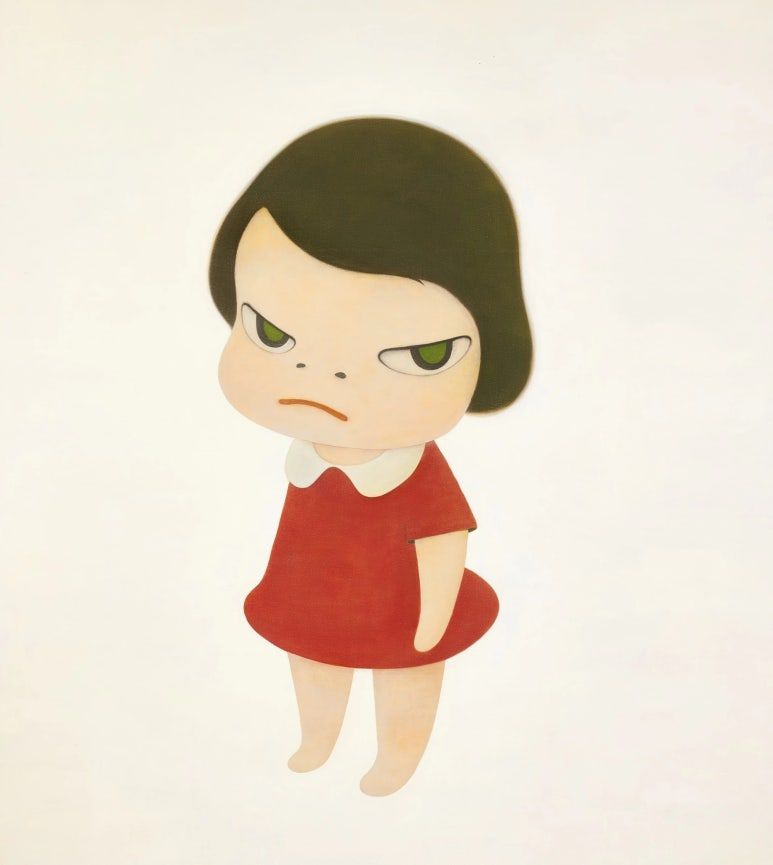
이 작품, '등 뒤에 칼을 숨기고(Knife Behind Back)'는 2019년 경매에서 일본 작가 작품 중 최고가인 300억 원에 낙찰된 기록을 가진 큰 화제를 모은 작품으로, 나라 요시토모의 상징적인 작품이다. 이 그림은 커다란 머리와 부루퉁한 표정의 소녀가 정면을 응시하고 있으며, 한 손을 등 뒤로 돌린 채 서 있는 모습의 작품이다. 그림의 제목에서 말하듯 소녀는 등 뒤에 칼을 숨기고 있음을 암시한다.
귀여운 외모의 소녀와 '칼'이라는 무서운 제목의 조합은 순수함과 위험, 장난기 넘치는 모습과 숨겨진 의도 사이의 모호함을 표현한다. 아이러니한 긴장감을 준다. 이렇듯 나라 요시토모의 작품은 겉으로는 귀여워 보이지만, 자세히 들여다보면 날카로운 눈매를 통해 고독, 저항, 반항 등 복잡한 내면을 드러내는 것이 특징입니다.
전 세계적인 갈등 상황 속에서, 나라 요시토모의 작품 속에 등장하는 '반항적이지만 순수한 아이'의 모습은 반전(Anti-war)과 치유의 상징으로 현재 강력한 지지를 지지를 받고 있는데, 그의 작품에 등장하는 아이들은 크고 날카로운 눈매를 가진 단순한 분노가 아니라, 어른들의 세계에 대한 불신과 저항, 동시에 내면의 고독을 상징한다.
섬뜩한 그림이다. 그러나 화가 나라 요시토모가 우리에게 전달하고 하는 것은 "아이의 눈을 통해 어른의 세상을 본다"라는 철학을 바탕으로, 현재를 살아가는 현대인들에게 깊은 위로와 성찰을 안겨주고자 하는 것이다.
사자성어에 면종복배(面從腹背)이라는 말이 있다. '앞에서는 순종하는 척하지만, 뒤에서는 딴마음을 먹거나 배신할 준비를 함을 뜻한다' 상황에 따라 "뒤통수를 치다"라고 표현할 수도 있다. 주로 정치권이나 조직 내에서 신뢰를 저버리는 행위를 비판할 때 자주 인용되는데, 최근 국회의원 보좌관들의 행위가 그 예가 될 수도 있을 것이다. 좋을 땐 모든 걸 다 내어 줄 것처럼 따르다, 이해타산이나 자기에게 불리한 순간이 돌아오면 그동안의 관계를 무시하고 숨겨 놓은 등 뒤의 칼을 들어내는 것이다. 비겁하고 의롭지 않은 행위다. 물론 이들이 이렇게 행동하게 한 당사자들도 문제임은 사실이다.
어느 쪽이 잘하고 잘못했다는 이야기가 아니라 예전의 의리나 충정을 이야기하지 못하는 것이 현재의 상황이다. 양쪽에 문제가 있는 것이 사실이지만 한편으로 '사람으로 흥하고 사람으로 망한다'라는 것을 항상 염두에 두고 신뢰와 정직으로 관계를 형성했다면 하는 아쉬움이 큰 대목이다.
일본 화가 나라 요시토모의 '등 뒤에 칼을 숨기고'를 감상하며 우리 정치의 바닥을 다시 한번 생각해 본다.
Knife Behind Back
This masterpiece, 'Knife Behind Back,' made headlines when it was auctioned in 2019 for 30 billion KRW, setting the record for the highest price ever paid for a work by a Japanese artist. It is a signature piece by Yoshitomo Nara. The painting depicts a girl with an oversized head and a sulky expression staring straight ahead, standing with one hand hidden behind her back. As the title suggests, it implies that the girl is concealing a knife behind her.
The juxtaposition of the cute-looking girl and the intimidating title, "Knife," expresses the ambiguity between innocence and danger, playfulness and hidden intentions. This creates an ironic tension. Nara’s work is characterized by this duality; while appearing cute at first glance, a closer look at the sharp eyes reveals complex inner emotions such as solitude, resistance, and rebellion.
Amidst global conflicts, the "rebellious yet innocent child" in Nara's work has gained strong support as a symbol of anti-war sentiment and healing. The children in his paintings, with their large and piercing eyes, do not represent mere anger, but rather a distrust of and resistance toward the adult world, as well as internal loneliness.
While the painting may seem eerie, Nara’s underlying philosophy is to "see the adult world through the eyes of a child," offering deep comfort and reflection to modern individuals.
There is a four-character Chinese idiom, Myeon-jong-bok-bae (面從腹背), which means "obeying outwardly while harboring deceit in one's heart" or preparing to betray. In certain contexts, it can be described as "stabbing someone in the back." This term is often cited to criticize acts of betrayal within politics or organizations, and the recent conduct of some parliamentary aides serves as an example. They follow faithfully when things are good, but the moment self-interest is at stake or a disadvantage arises, they ignore the past relationship and reveal the "knife" hidden behind their backs. It is a cowardly and unrighteous act. Of course, it is also true that the individuals who drove them to act this way are part of the problem.
The point is not about who is right or wrong, but rather the reality that we can no longer speak of the loyalty or devotion of the past. While both sides are at fault, it is deeply regrettable that they did not build relationships based on trust and honesty, keeping in mind the proverb: "One rises by people and falls by people."
While appreciating Yoshitomo Nara’s 'Knife Behind Back,' I find myself reflecting once again on the current state of our politics.
