



[토마스의 그림이야기 43] 교회 가는 길(On the Way to Church) - AI (T.Y.B.Lee Ph.d)
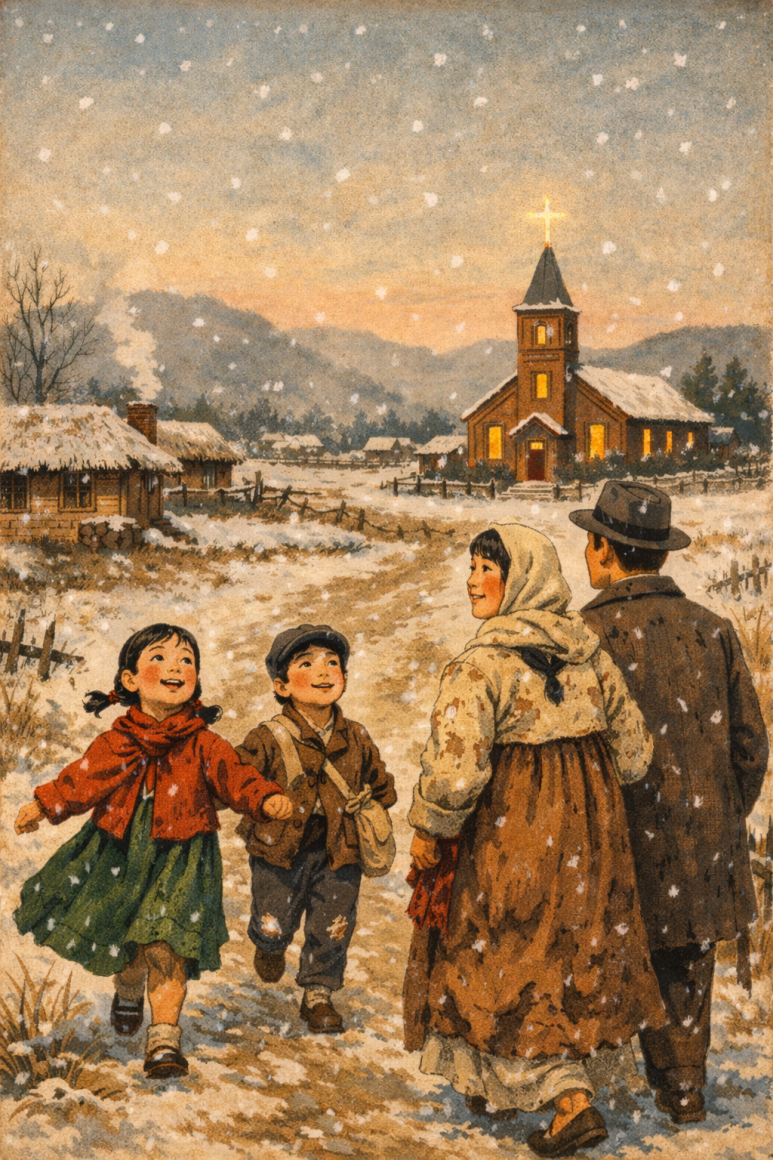
이 작품은 1950년대를 시대 배경으로 하는 '교회 가는 길'이란 제목의 'AI (창작)' 그림이다. 한국 농촌의 가난한 현실 속에서도 사라지지 않았던 ‘희망과 신앙, 가족의 연대’를 상징적으로 담고 있다.
허름한 옷차림과 눈 덮인 시골길은 전쟁 직후 한국 농촌의 궁핍한 생활을 암시한다. 하지만 인물들은 고개를 숙이거나 절망에 빠진 모습이 아니라, 서로를 바라보고 앞으로 나아간다. 이는 물질적 빈곤 속에서도 인간의 존엄과 삶의 의지가 유지되고 있음을 보여준다.
딸과 아들이 부모보다 앞서 신나게 걸어가는 모습은 매우 중요한 의미를 지닌 장면이다. 아이들은 미래, 새 세대, 가능성을 상징하며, 그들이 웃으며 교회를 향해 가는 모습은 “이 시대의 고난이 이 아이들의 삶까지는 지배하지 못할 것”이라는 희망의 메시지를 전하고 있다.
부모는 아이들 뒤에서 묵묵히 걸어간다. 이는 당시 부모 세대가 짊어졌던 희생과 책임, 침묵의 사랑을 상징한다. 말없이 뒤따르지만, 그들의 존재 자체가 아이들을 지켜주는 울타리이자 아이들이 개척해 갈 미래에 대한 본이기도 하다.
하늘에서 내리는 눈은 아름답지만 차갑다. 이는 시련과 고난의 시간을 의미한다. 그러나 눈은 동시에 세상을 덮어 새롭게 만드는 존재이기도 하다. 가난한 고통의 시간 속에서도 새로운 시작이 가능하다는 이중적 상징을 담고 있다.
멀리서 따뜻한 불빛을 내는 교회는 이 그림의 중심적 상징이다. 많은 변질이 있었지만 최소한 그 당시 교회는 단순한 종교 공간을 넘어, 아프고 힘든 자들의 공동체이자 현실을 떨쳐버리고 앞으로 나아갈 미래에 대한 구원의 약속이기도 했다. 더 나은 내일에 대한 믿음이었고 조용하지만 단단한 희망 행진의 구심점이었다.
근 80년이 지났다. 이 시점에 우리는 다시 한번 그 시절을 되짚어 보아야 한다. 이 그림에서 이야기하는 “가난해도 가족이 있고, 믿음이 있으며, 아이들이 웃는 한 희망은 사라지지 않는다”라는 한국 근현대사의 정신을 담은 서사적 메시지가 지금 얼마나 변질되어 있는지, 눈길을 걷는 작은 가족의 발걸음을 바라보며 다시 한번 깊이 생각해 보아야 한다.
On the Way to Church
This work is an AI-created artwork titled “On the Way to Church,” set in the 1950s. It symbolically captures the hope, faith, and family solidarity that endured even amid the harsh poverty of rural Korea.
The shabby clothing and snow-covered country road suggest the destitute conditions of rural life in Korea shortly after the war. Yet the figures are not bowed in despair or overwhelmed by hopelessness. Instead, they look at one another and continue moving forward. This reflects the preservation of human dignity and the will to live, even in the midst of material poverty.
The scene in which the daughter and son walk joyfully ahead of their parents carries profound meaning. The children symbolize the future, a new generation, and possibility. Their smiling faces as they head toward the church convey a hopeful message: “The suffering of this era will not come to dominate the lives of these children.”
The parents walk silently behind their children. This represents the sacrifices, responsibilities, and quiet love borne by the parental generation of that time. Though they follow without words, their very presence forms a protective shelter for the children and serves as a living example for the future the children will forge.
The snow falling from the sky is beautiful yet cold, symbolizing a time of trials and hardship. At the same time, snow also blankets the world and allows it to be renewed. It carries a dual symbolism: even amid the pain of poverty, a new beginning remains possible.
The church emitting a warm light in the distance stands as the central symbol of the painting. Though much has changed over time, at least in that era the church was more than a religious space. It was a community for the wounded and weary, a promise of salvation that enabled people to cast off their harsh reality and move toward the future. It embodied faith in a better tomorrow and served as the quiet yet steadfast focal point of a march of hope.
Nearly eighty years have passed. At this moment, we must once again reflect on that time. As we watch the footsteps of this small family walking through the snow, we are called to deeply reconsider how much the narrative message expressed in this painting—“Even in poverty, as long as there is family, faith, and children who can smile, hope does not disappear”—a spirit rooted in modern Korean history, has been altered or diluted in the present day.
