



[토마스의 그림이야기 41] 아빠와 엄마 얼룩말_ 에드워드 티링가팅가
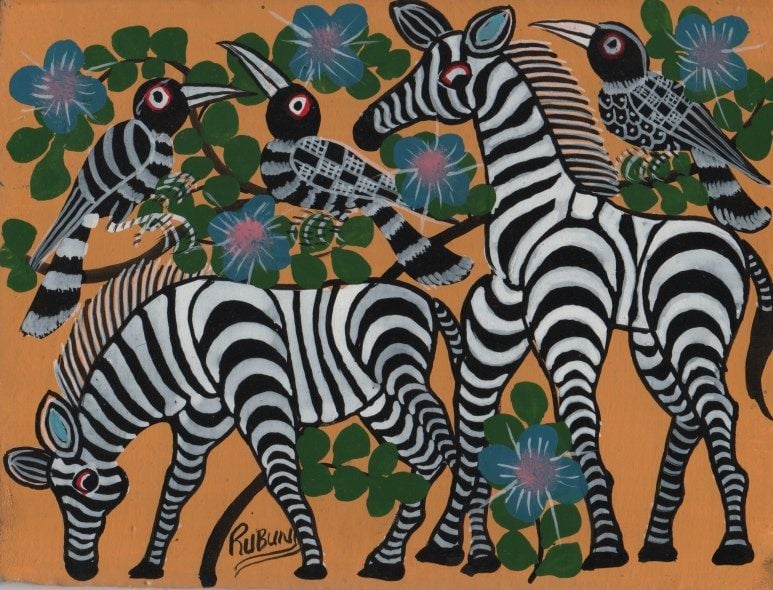
이 작품, '아빠와 엄마 얼룩말(Punda Mila Baba na Mama)'은 탄자니아 화가 에드워드 티링가팅가 1970년경에 제작하기 시작하여 이후에도 계속해서 작업해 온, 전형적인 "팅가팅가" 스타일의 동아프리카 야생 동물 그림이다. 팅가팅가(Tingatinga , Tinga-tinga 또는 Tinga Tinga 로도 표기 )는 아프리카 탄자니아에서 시작된 현대 민속 회화 양식이자, 그 양식을 만든 화가 에드워드 사이디 티링가팅가의 이름에서 나온 말이다.
팅가팅가 스타일은 원색의 자전거에 칠하는 페인트나 에나멜페인트를 사용하여 강렬한 색채와 단순성으로 생생하고 포화된 색상을 표현하며(자전거 페인트), 대상은 단순하고 평면적으로 묘사된다. 또한 두껍고 검은 선으로 인물이나 동물의 윤곽을 뚜렷한 윤곽선으로 그려 강렬한 시각적 대비를 만들어낸다. 초기에는 저렴한 건축 자재인 사각 섬유판(masonite)이나 버려진 천장 타일을 주로 사용했지만, 현재는 캔버스 등 다양한 재료에 그려진다. 아프리카에서 시작된 양식인 만큼 주로 아프리카 야생동물, 설화 속 생물, 춤추는 부족민, 시골 및 도시의 일상생활 등을 주요 주제를 아프리카의 문화와 자연을 해학적으로 묘사한다.
자전거 페인트는 색채가 선명하고, 햇빛에도 잘 바래지 않는 특징으로 아프리카의 강한 태양 아래에서도 색이 살아남는 특징이 있다.
정규 미술 교육을 받지 않았던 에드워드 티링가팅가는 관광객들에게 그림을 팔아 생계를 유지하고자 했고, 저렴한 재료를 활용하여 그만의 독특한 스타일을 개발했다. 1972년 그가 비극적으로 사망한 후에도 그의 화풍은 큰 인기를 얻어 추종자들과 모방자들의 광범위한 운동으로 이어졌으며, 이를 '팅가팅가 학교'라고 부르기도 한다. 오늘날 그의 유산은 그의 제자들과 후배 작가들이 설립한 팅가팅가 예술 협동조합(Tingatinga Arts Cooperative Society, TACS)을 통해 계승 및 발전되고 있다.
팅가팅가 예술은 현재 탄자니아와 케냐 등 동아프리카 전역에서 널리 알려진 관광 기념품이기도 하며, 어린이 애니메이션 시리즈인 '팅가팅가 이야기'의 영감이 되기도 했다.
이 작품, '아빠와 엄마 얼룩말(Punda Mila Baba na Mama)는 팅가팅가 화파의 대표적 얼룩말 작품으로, 자전거 페인트와 합판을 사용한 아프리카 현대 민속 미술의 전형을 보여주는 작품이다. 얼핏 보면 아이들의 그림처럼 보이는 이 그림이 아이들이 그린 것처럼 보이는 것은 원근법·해부학 무시하고, 동물 형태를 단순화하고 있으며, 얼룩, 깃털, 잎사귀를 장식처럼 반복 사용하고 또한 그림자·톤 변화가 거의 없이 원색 위주로 그림이 그려져 있기 때문이다.
그림의 화면 하단의 서명 “Rubuni”은 팅기팅가 스타일의 창시자인 티링가팅가 본인의 작품임을 말해준다.
Father and Mother Zebra (Punda Milia Baba na Mama)
This work, Father and Mother Zebra (Punda Milia Baba na Mama), is a typical example of the East African wildlife paintings in the “Tingatinga” style. It was first produced around 1970 by the Tanzanian artist Edward Saidi Tingatinga and has continued to be recreated in various forms thereafter.
Tingatinga (also spelled Tinga-tinga or Tinga Tinga) refers both to a modern folk painting style that originated in Tanzania, Africa, and to the name of its creator, Edward Saidi Tingatinga.
The Tingatinga style is characterized by the use of brightly colored bicycle enamel or industrial enamel paints, which produce vivid, saturated colors through bold simplicity. Subjects are depicted in a flat and highly stylized manner. Figures and animals are outlined with thick black lines, creating strong visual contrast and clarity. In its early stages, Tingatinga paintings were often executed on inexpensive materials such as masonite boards or discarded ceiling tiles, though today the style is also practiced on canvas and other supports.
As a painting tradition rooted in Africa, Tingatinga art typically portrays African wildlife, mythical creatures from folklore, dancing tribespeople, and scenes from rural and urban daily life, humorously and expressively reflecting African culture and nature.
Bicycle enamel paint is especially notable for its intense color and resistance to fading under strong sunlight, allowing the colors to remain vibrant even beneath Africa’s powerful sun.
Edward Tingatinga, who received no formal art education, began painting as a means of supporting himself by selling works to tourists. By using inexpensive materials, he developed a highly distinctive and original visual language. Even after his tragic death in 1972, his style continued to gain popularity, inspiring a broad movement of followers and imitators known as the “Tingatinga School.” Today, his artistic legacy is preserved and further developed by his students and later artists through the Tingatinga Arts Cooperative Society (TACS).
Tingatinga art has since become widely recognized across East Africa, including Tanzania and Kenya, as a popular form of tourist art. It has also inspired the children’s animated television series Tinga Tinga Tales.
This work, Father and Mother Zebra (Punda Milia Baba na Mama), is a representative zebra painting of the Tingatinga school and exemplifies African modern folk art through its use of bicycle enamel paint and wooden board. At first glance, the painting may resemble a child’s drawing. This impression arises from its disregard for linear perspective and anatomical realism, its simplified animal forms, the decorative repetition of stripes, feathers, and leaves, and its reliance on primary colors with little use of shading or tonal variation.
The signature “Rubuni” at the bottom of the painting indicates that the work belongs to the Tingatinga tradition established by Tingatinga himself.
