



[토마스의 그림이야기 38] 투계도 _ 혜원 신윤복
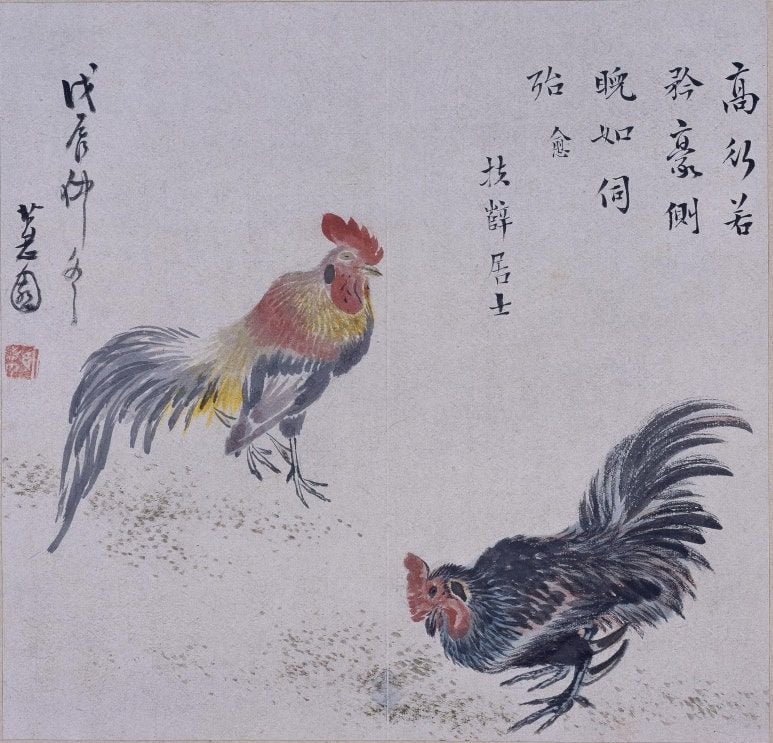
이 작품은 국립중앙박물관에 소장되어 있는 신윤복의 '투계도'이다. 붉은 닭과 검은 닭 두 마리가 마주 보고 있는 순간을 묘사하고 있는 그림으로 아마도 두 닭은 싸움이 시작되기 전 각자의 기세를 드러내며 상대방을 탐색하고 있는 듯하다. 붉은 닭은 곧 공격하려는 듯 기세 좋게 가슴을 펴고 똑바로 서 있고, 검은 닭은 몸을 낮추고 경계하는 자세를 취하고 있어 곧 이어질 싸움을 암시한다. 싸움이 시작되기 직전의 짧은 정적(靜的)의 순간, 두 닭의 긴장과 에너지가 느껴진다.
신윤복은 풍속화를 주로 그린 화가로 알려져 있지만, '투계도'에서는 동물의 움직임과 심리를 섬세하고 사실적으로 표현하는 능력도 갖추었음을 보여준다. 보통 신윤복의 풍속화는 사람들의 삶, 도시 풍경, 유흥과 사랑을 중심으로 하지만, 투계도는 일상의 놀이와 동물의 긴장 속 상호작용을 통해 조선 사람들의 놀이 문화까지 담아내고 있다.
다시 말해 투계도는 신윤복이 동물의 움직임과 긴장감을 사실적으로 묘사한 작품으로, 닭싸움이라는 당시 놀이 문화의 한 장면을 통해 작가의 관찰력과 표현력을 느낄 수 있는 조선 후기 회화이다. 싸움닭의 순식간의 역동성과 긴장감이 화폭에 잘 전달되어, 보는 이로 하여금 곧 이어질 상황까지 상상하게 만드는 힘이 느껴지게 한다.
투계는 수탉끼리 싸우게 하여 승부를 겨루는 놀이로, 조선시대에는 오늘날의 스포츠라기보다는 민간 오락·내기·구경거리의 성격이 강한 생활 풍속이었다. 주로 서민층과 장터, 마을 단위에서 이루어졌으며, 명절이나 장날에 사람들이 모여 구경하며, 소액의 내기나 자존심 대결의 성격을 띠었다. 공식적으로는 유교 윤리에 어긋난다고 보아 양반사회에서는 부정적으로 보았지만 실제로는 양반층도 비공식적으로 즐겼던 놀이로 양반사회에서도 “천한 놀이지만 은근히 퍼져 있던 풍속”이었다.
조선에서 닭은 단순한 가축이 아니라 용맹·기개·남성성을 그리고 새벽을 알리는 존재로 각성과 질서를 상징하는 동물이었다. 수탉의 붉은 볏은 혈기와 기운을 나타는 것이었으며, 싸우는 닭은 곧 사람의 기질과 경쟁심을 상징했다.
Fighting Cocks (Tugyedo) by Shin Yun-bok
This work is Fighting Cocks (Tugyedo), painted by Shin Yun-bok and currently housed in the National Museum of Korea. The painting depicts a moment in which a red rooster and a black rooster face each other just before a fight begins. Rather than showing the clash itself, the artist captures the instant when both birds reveal their fighting spirit while cautiously gauging their opponent.
The red rooster stands upright with its chest thrust forward, poised to launch an attack at any moment, while the black rooster lowers its body in a defensive stance, remaining alert and watchful. The contrast between these two postures heightens the sense of tension and anticipates the imminent struggle. In this brief moment of stillness before the action, a powerful concentration of energy and psychological tension permeates the scene. By choosing to portray the calm immediately preceding the fight, Shin Yun-bok intensifies the dramatic effect of the composition.
Shin Yun-bok is widely known as a painter of genre scenes depicting everyday life, urban culture, entertainment, and romantic encounters. However, Fighting Cocks reveals his equally keen ability to observe and render the movements and psychological states of animals with delicacy and realism. Although animals replace human figures in this painting, the work nevertheless reflects the daily life and emotional world of Joseon society. In this sense, the painting expands the scope of genre painting beyond human activities to encompass popular forms of leisure and play.
Cockfighting in the Joseon period was not a sport in the modern sense, but rather a form of popular entertainment, often accompanied by small wagers and communal spectatorship. It was primarily enjoyed by commoners in marketplaces and villages, especially on holidays and market days. While officially condemned by the Confucian values of the yangban elite as a vulgar pastime, cockfighting was in reality also enjoyed informally by members of the upper classes, making it a widespread but ambivalent aspect of Joseon social life.
In Joseon culture, the rooster was more than a mere domestic animal. It symbolized bravery, vigor, and masculinity, and its crowing at dawn represented awakening and social order. The rooster’s red comb signified vital energy and blood, and a fighting cock thus came to embody human temperament, competitiveness, and the desire for victory.
Ultimately, Fighting Cocks condenses the emotions, tensions, and everyday sensibilities of late Joseon society into a single scene of popular entertainment. Through the depiction of two roosters locked in a moment of charged stillness, the painting vividly conveys Shin Yun-bok’s sharp powers of observation and expressive skill, inviting the viewer to imagine the dramatic action that is about to unfold beyond the frame.
