



[토마스의 그림이야기 47] 까치호랑이
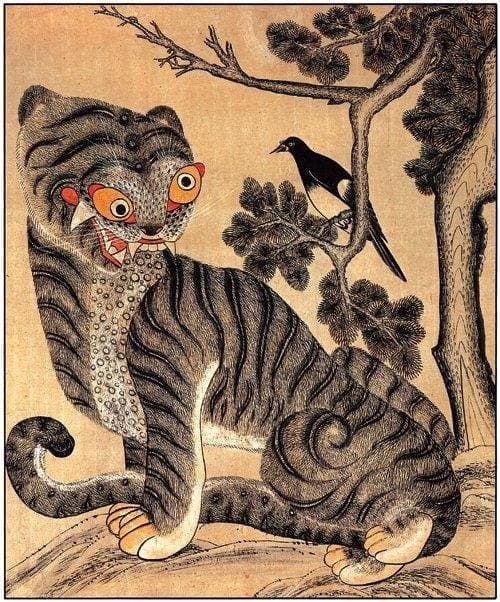
조선 후기 민화의 정수인 ‘까치호랑이(호작도, 虎鵲圖)’는 호랑이와 까치를 한 화면에 담아낸 독창적인 상징 회화이다. 영물로 추앙받으면서도 공포의 대상이었던 호랑이, 기쁜 소식을 전해주는 까치, 그리고 우리 민족의 삶에 뿌리 내린 소나무는 한국인이 가장 사랑하는 소재들이다. 이러한 친숙함 덕분에 까치호랑이는 한국 민화의 대명사로 자리 잡았다.
까치호랑이의 전형적인 구도는 소나무 위에서 내려다보는 까치와 그 아래 위치한 호랑이의 모습이다. 주목할 점은 호랑이가 맹수로서의 위엄 대신 어딘지 어리숙하고 우스꽝스러운 표정을 짓고 있다는 것이다. 이는 단순한 묘사를 넘어 당시 사회를 향한 날카로운 풍자를 담고 있다. 절대 권력을 쥔 양반이나 탐관오리는 ‘바보 호랑이’로 희화화되고, 지혜로운 서민을 상징하는 까치는 그들을 당당히 꾸짖거나 조롱한다. 신분 질서에 억눌려 있던 서민들은 이러한 구성을 통해 부조리한 현실을 비판하며 심리적 카타르시스를 느꼈던 것이다.
또한, 흥미로운 사실은 조선시대 민화 속 호랑이가 종종 표범의 무늬와 뒤섞여 나타난다는 점이다. 이는 당시 한반도에서 호랑이와 표범을 엄격히 구분하지 않았던 문화적 배경을 보여준다. 이처럼 격식에 얽매이지 않는 자유로운 표현 방식은 중국의 군왕 중심 회화 전통과는 차별화된, 철저히 ‘민중 중심의 미학’이 빚어낸 산물이었다.
전통 민화의 이러한 해학 정신은 2026년 현재, 세계적인 흥행작인 애니메이션 《카데헌(케이팝 데몬 헌터스)》으로 이어지고 있다. 작품 속 마스코트인 ‘범’은 송곳니가 튀어나온 어리숙하고 귀여운 모습으로 민화 속 호랑이를 계승하며, 세 개의 눈을 가진 요괴풍 까치는 영리한 메신저로서 민화적 상징을 현대적으로 재해석한다. 《카데헌》은 과거 민중이 누렸던 풍자와 재미의 미학을 K-콘텐츠만의 독특한 캐릭터 디자인으로 승화시켰다.
결국 까치호랑이는 단순한 옛 그림이 아니다. 부패한 권력을 조롱하고 민중의 승리를 염원하던 그 시절의 마음은 한국의 촛불혁명을 거쳐, 최근 파키스탄과 이란 등에서 분출되는 세계적인 민주화 열망과도 맞닿아 있다. 시대를 초월해 백성의 마음을 대변해 온 까치호랑이는, 오늘날에도 여전히 우리 곁에서 살아 숨 쉬며 자유와 안녕의 메시지를 전하고 있다.
Magpie and Tiger Folk Painting
The "Magpie and Tiger (hojakdo, 虎鵲圖)" painting, the essence of late Joseon Dynasty folk art (minhwa), is a unique symbolic painting that incorporates a tiger and a magpie on a single canvas. The tiger, both revered as a sacred creature and feared, the magpie, which brings good news, and the pine tree, deeply rooted in the lives of the Korean people, are the most beloved subjects for Koreans. Thanks to this familiarity, the magpie and tiger motif has become synonymous with Korean folk painting.
The typical composition of a magpie and tiger painting features the magpie looking down from atop a pine tree, with the tiger positioned below. The notable point is that the tiger, instead of exuding the dignity of a beast of prey, wears a somewhat naive and comical expression. This goes beyond a simple depiction and contains sharp satire aimed at the society of the time. The noblemen and corrupt officials who held absolute power are caricatured as "foolish tigers," while the magpie, symbolizing the wise common people, boldly scolds or mocks them. The commoners, oppressed by the rigid social hierarchy, felt a sense of psychological catharsis by criticizing the irrational reality through this composition.
Furthermore, it is interesting to note that the tiger in Joseon Dynasty folk paintings often appears mixed with leopard spots. This reflects the cultural background of the time in the Korean Peninsula, where tigers and leopards were not strictly distinguished. This free form of expression, unconstrained by rigid formats, was a product of a thoroughly "people-centered aesthetic," clearly differentiated from the monarch-centered painting traditions of China.
This spirit of humor and satire from traditional folk painting continues today, in 2026, with the globally successful animation "K-Pop Demon Hunters." The mascot within the work, "Beom" (tiger), inherits the folk painting tiger's look with its fangs sticking out and a naive, cute appearance, while a three-eyed, goblin-like magpie acts as the protagonists' clever messenger, modernly reinterpreting the folk painting's symbolism. "K-Pop Demon Hunters" has elevated the aesthetic of satire and fun enjoyed by the people of the past into the unique character design of K-content.
Ultimately, the magpie and tiger painting is not merely an old picture. The desire of that era to mock corrupt power and wish for the victory of the common people connects with Korea's Candlelight Revolution and the global democratic aspirations recently erupting in Pakistan and Iran. The magpie and tiger, which have represented the hearts and minds of the people across time, continue to live and breathe beside us today, conveying a message of freedom and well-being.
