



[토마스의 그림이야기 53] 선인장 _ 이광호
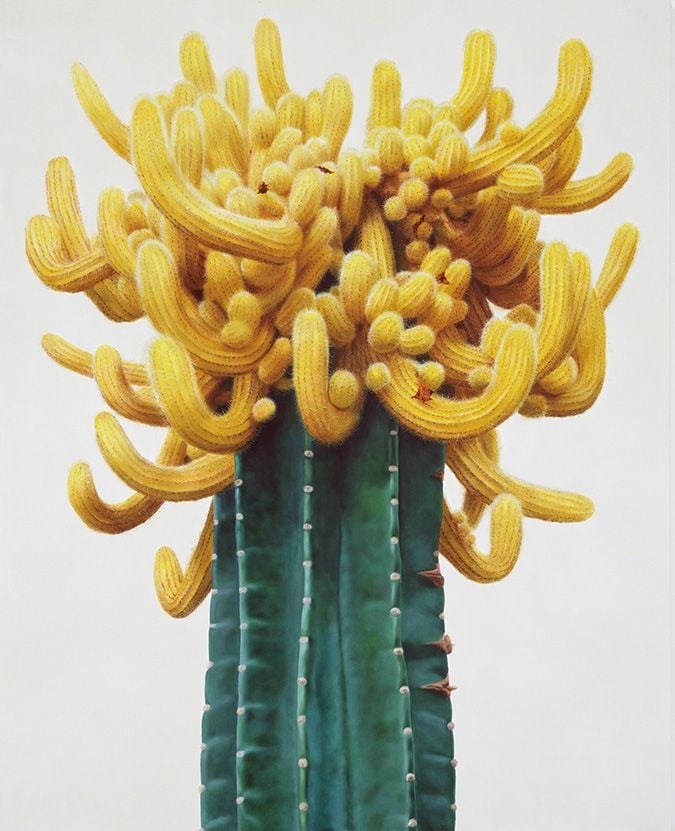
이 작품은 구상화가 이광호 작가의 〈선인장〉 시리즈 중 하나이다. 〈선인장〉 연작은 이광호의 작업 세계를 이해하는 데 핵심적인 위치를 차지한다. 그의 선인장은 멀리서 보면 사진처럼 보이지만, 가까이 다가가면 전혀 다른 양상을 드러낸다. 붓질은 숨겨지지 않고, 가시 하나하나가 물리적인 흔적으로 남아 있다. 이는 대상을 사실적으로 재현하기보다, 그리는 시간과 몸의 움직임을 화면에 축적하려는 태도에서 비롯된다.
이광호의 〈선인장〉은 무수한 붓질과 나이프 자국, 문지르기와 두드리기 같은 반복적인 터치를 통해 점차 극대화된다. 그 과정에서 대상은 구체적인 형상을 넘어 추상적인 면과 색의 덩어리로 확장되며, 비현실적일 만큼 거대하게 확대된 화면은 때로 선정적이거나 동물적인 인상마저 준다. 이처럼 그의 선인장은 사실성과 추상성을 동시에 내포한 채 전혀 다른 차원의 이미지로 발산된다.
이 연작에서 가장 중요한 요소는 표면이다. 매끈한 자연의 피부가 아니라, 수천 번의 붓질로 쌓아 올린 거칠고 둔중한 표면은 자연 묘사가 아니라 회화가 회화로 존재하는 방식을 드러낸다. 그래서 그의 선인장은 생명체라기보다 물성의 덩어리이자 노동이 응축된 결과물, 그리고 강한 촉각성을 지닌 회화적 오브제로 인식된다.
이광호는 서울대학교 미술대학에서 서양화를 전공하고, 동 대학원에서 판화를 전공하였다. 현재는 이화여자대학교 조형예술대학 서양화과 교수로 재직 중이다. 그는 2000년대 한국 구상회화를 대표하는 화가로, 대상을 ‘잘 그리는 것’보다 그리는 행위와 시간, 노동의 밀도를 회화의 중심에 놓아 왔다. 선인장, 밧줄, 타이어, 장갑 등 형태가 분명하고 반복 구조를 지닌 사물을 집요하게 다루며, 재현을 넘어 회화의 물성과 축적된 붓질을 전면에 드러낸다. 이로써 그의 회화는 이미지가 아니라, 시간이 응고된 결과물로 존재한다.
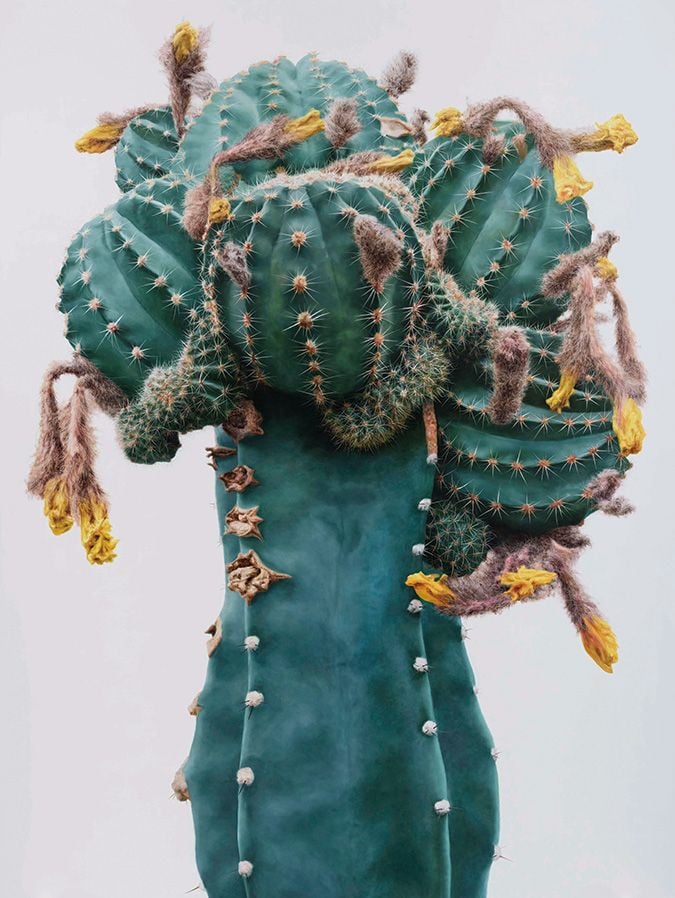
Cactus series by Lee Kwang-Ho
This work is part of Lee Kwang-Ho’s Cactus series, a body of work that occupies a central position in understanding his artistic practice. From a distance, his cacti appear almost photographic, yet upon closer inspection they reveal an entirely different presence. The brushstrokes are not concealed, and each thorn remains as a tangible, physical trace. Rather than aiming for faithful representation, Lee accumulates on the canvas the time spent painting and the movement of the artist’s body.
Lee’s Cactus series is gradually intensified through countless brushstrokes, knife marks, and repetitive gestures such as rubbing and tapping. In this process, the subject expands beyond concrete form into abstract planes and masses of color. The image, enlarged to an almost unreal scale, can at times appear sensual or even animalistic. In this way, Lee’s cacti simultaneously contain realism and abstraction, radiating as images that belong to an entirely different dimension.
The most crucial element of this series is surface. Rather than a smooth natural skin, the rough and heavy surface—built up through thousands of accumulated brushstrokes—reveals not a depiction of nature, but the way painting exists as painting. As a result, Lee’s cacti appear less as living organisms than as masses of material, condensations of labor, and tactile painterly objects.
Lee Kwang-Ho studied Western painting at the College of Fine Arts, Seoul National University, and later specialized in printmaking at the graduate level. He is currently a professor in the Department of Painting at Ewha Womans University. As one of the leading figures in Korean figurative painting since the 2000s, Lee places the act of painting itself—along with time and the density of labor—at the center of his work, rather than the faithful depiction of objects. Through persistent engagement with subjects such as cacti, ropes, tires, and gloves—objects defined by clear forms and repetitive structures—he moves beyond representation to foreground materiality, surface, and accumulated brushwork. His paintings thus exist not as images, but as the solidification of time.
