



[토마스의 그림이야기 62] 초원시명도 - 김홍도
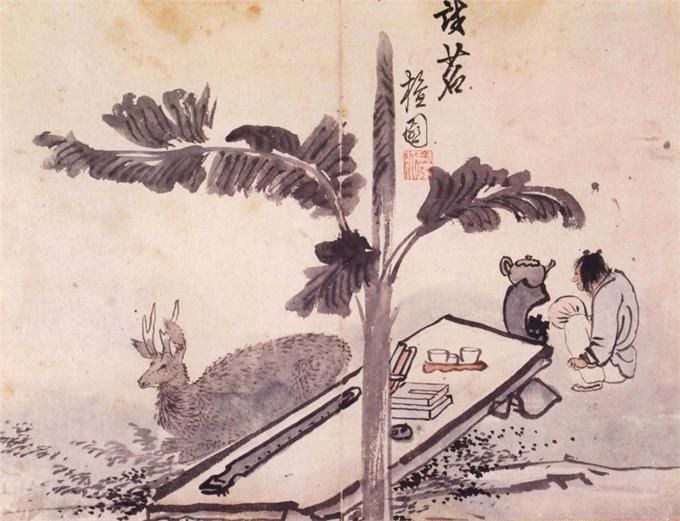
신라나 고려 시대와는 달리 조선에서는 후기까지 차 문화가 크게 각광받지 못하였다. 그 결과 차와 관련된 그림 또한 많지 않다. 〈초원시명도(蕉園試茗圖)〉는 단원 김홍도가 남긴 작품으로, 조선 시대에 드물게 볼 수 있는 차 관련 그림 가운데 하나이다.
이 그림의 제목 ‘초원시명도(蕉園試茗圖)’를 풀이하면 ‘파초가 있는 정원에서 차를 맛본다’는 뜻이다. 그러나 그림 속 장면은 동자가 차를 맛보는 모습이라기보다, 쪼그리고 앉아 질화로 위에 무쇠 다관을 올려놓고 차를 달이는 장면에 가깝다. 여기서 초원(蕉園)은 ‘파초가 있는 정원’을 의미하고, 시명(試茗)은 ‘차를 맛본다’는 뜻이다.
그림의 중앙에는 커다란 파초가 그려져 있다. 파초는 도교적 상징에서 속세를 벗어난 선인(仙人)의 풍취를 나타내는 식물로 여겨진다. 단원이 이 그림에 파초를 배치한 것은 동자가 차를 달이고 있는 공간이 단순한 세속의 장소가 아니라, 신선이 머무는 듯한 초월적 공간임을 암시하려는 의도였을 것이다. 탁자 옆에 얌전히 앉아 있는 사슴 또한 이러한 의미를 더해 주는 상징적 존재로 보인다.
차 문화에는 다선일미(茶禪一味)라는 말이 있다. 이는 차를 마시는 행위를 통해 선(禪)의 경지를 깨닫는다는 뜻이다. 초의선사는 “한 잔의 차로 선을 맛본다”는 의미에서 선의 경지와 차의 맛이 서로 다르지 않다고 보았다. 즉 선과 도는 멀리 있는 것이 아니라, 차를 마시는 일상 속에서 깨달을 수 있다는 것이다. 김홍도의 〈초원시명도〉에는 차를 마시는 인물은 등장하지 않지만, 차를 준비하는 과정 자체가 이미 수행의 한 과정임을 암시하고 있는 듯하다.
인류가 처음 차를 마시기 시작했을 때 차는 음료라기보다 약용으로 사용되었다. 차에는 카페인, 폴리페놀, 카테킨, 테아닌, 타닌, 엽록소, 유기산, 비타민 등 다양한 성분이 들어 있다. 이러한 성분들은 암 발생과 고혈압을 억제하고, 여성 질환과 당뇨병 예방, 충치 예방, 식중독 예방, 알코올 분해 등에 도움을 준다고 알려져 있다.
카페인은 이뇨 작용에 도움을 주며, 적정량 섭취 시 원기 회복이나 편두통 완화 등에 긍정적인 영향을 줄 수 있다. 폴리페놀은 강한 항산화 작용을 하며 구강 청정과 탈취 효과가 있고 콜레스테롤 흡수를 억제한다. 또한 차의 떫은맛을 내는 주요 성분인 카테킨은 비만 예방과 자외선에 의한 피부 노화 억제 등에 도움이 되는 것으로 알려져 있다.
찻잎에 들어 있는 아미노산인 테아닌(Theanine) 역시 중요한 성분이다. 테아닌은 카페인의 흡수를 완화하고 혈압 상승을 억제하며 긴장을 완화하는 데 도움을 준다. 또한 스트레스 호르몬인 코르티솔의 수치를 낮추어 스트레스 완화에 기여하고, 신경의 과도한 흥분을 억제하여 불안감을 줄이는 데 도움을 줄 수 있다. 이러한 작용은 명상이나 정신적 안정 상태를 돕는 효과와도 관련이 있는 것으로 알려져 있다.
차에는 이 밖에도 비타민 A, B1, B2, C, E 등이 풍부하여 원기 회복과 질병 예방에 도움을 줄 수 있다. 특히 고마이계와 같이 좋은 자연 환경에서 생산된 차에는 이러한 유익한 성분뿐 아니라 미네랄과 게르마늄 등 다양한 미량 성분도 풍부하게 함유되어 있다.
아래의 시는 당나라 중기의 시인이자 차 애호가로 ‘다선(茶仙)’이라 불렸던 노동(盧仝)이 남긴 차시이다. 제목은 〈맹간의가 보내준 새 차에 사례하며 글을 쓰다(走筆謝孟諫議寄新茶)〉이다. 비록 차의 화학적 성분이 밝혀지기 이전 시대에 지어진 시이지만, 차를 마실 때 느껴지는 정신적 맑음과 몸의 변화를 섬세하게 묘사하고 있어 오늘날 우리가 아미노산이나 테아닌의 효과로 이해하는 차의 작용을 시적으로 표현한 것처럼 느껴지기도 한다.
一碗喉吻潤
二碗破孤悶
三碗搜枯腸 惟有文字五千卷
四碗發輕汗 平生不平事 盡向毛孔散
五碗肌骨淸
六碗通仙靈
七碗喫不得也 唯覺兩腋習習淸風生
첫째 잔은 목과 입술 적시고
둘째 잔은 외로운 고민 달래고
셋째 잔은 마른 창자 헤쳐주니 오직 뱃속에는 문자 오천 권이 있을 뿐이라.
넷째 잔은 가벼운 땀을 내니 평생에 불평스러운 일 모두 땀구멍으로 흩어지네.
다섯째 잔은 살과 뼈대[肌骨]를 맑게 하고
여섯째 잔은 신령(神靈)을 통하게 하며
일곱째 잔은 마실 것도 없이 양쪽 겨드랑이에서 솔솔 청풍이 일어남을 느끼네.
Chowonsimyeongdo (蕉園試茗圖) by Kim Hong-do
Unlike in the Silla and Goryeo periods, tea culture in the Joseon Dynasty was not widely appreciated until the late Joseon era. As a result, paintings related to tea are relatively rare. Chowonsimyeongdo (蕉園試茗圖) is a work by the painter Danwon Kim Hong-do, and it is one of the few surviving Joseon paintings that depict a tea-related scene.
The title Chowonsimyeongdo (蕉園試茗圖) literally means “tasting tea in a plantain garden.” However, the scene in the painting does not actually show someone tasting tea. Rather, it depicts a young attendant crouching beside a brazier, placing an iron teapot over the fire and preparing tea. Here, Chowon (蕉園) refers to a “garden where plantain trees grow,” while Simyeong (試茗) means “to taste tea.”
At the center of the painting stands a large plantain tree. In Daoist symbolism, the plantain is often associated with the refined atmosphere of immortals who have transcended worldly life. By including the plantain in the scene, the artist likely intended to suggest that the place where the young attendant prepares tea is not merely an ordinary worldly setting but rather a transcendental space reminiscent of the dwelling place of immortals. The deer sitting quietly beside the table may also serve as a symbolic element reinforcing this meaning.
In tea culture, there is a well-known phrase, “Tea and Zen are of one flavor” (茶禪一味). This expression means that through the act of drinking tea, one may attain the state of Zen enlightenment. The Buddhist monk Cho-ui Seonsa explained that tasting Zen through a cup of tea and tasting tea through the state of Zen are essentially the same experience. In other words, Zen and the Way are not distant ideals but can be realized within the simple act of drinking tea in everyday life. Although no figure in Kim Hong-do’s Chowonsimyeongdo is actually shown drinking tea, the painting seems to suggest that even the preparation of tea itself can be regarded as a form of spiritual cultivation.
When humanity first began drinking tea, it was used more as a medicinal substance than as a beverage. Tea contains a variety of components, including caffeine, polyphenols, catechins, theanine, tannins, chlorophyll, organic acids, and vitamins. These compounds are known to help suppress the development of cancer and high blood pressure, and they may also contribute to the prevention of certain women’s diseases, diabetes, dental cavities, food poisoning, and the breakdown of alcohol in the body.
Caffeine promotes diuretic activity and, when consumed in moderate amounts, can help restore vitality and alleviate migraines. Polyphenols possess strong antioxidant properties, help maintain oral hygiene, and reduce cholesterol absorption. Catechins, which are responsible for tea’s characteristic astringent taste, are also known to assist in preventing obesity and protecting the skin from ultraviolet-induced aging.
Another important component found in tea leaves is the amino acid theanine. Theanine helps moderate the absorption of caffeine, suppresses increases in blood pressure, and promotes relaxation. It also lowers levels of the stress hormone cortisol, helping to relieve stress, and prevents excessive neural excitation, which may reduce feelings of anxiety. These effects are also believed to support meditation and mental calmness.
In addition, tea contains abundant vitamins such as A, B1, B2, C, and E, which can help restore vitality and prevent disease. Particularly in teas grown in favorable natural environments—such as those produced from the Gomai cultivar—beneficial substances including minerals and germanium are also found in significant amounts.
The poem presented below was written by Lu Tong (盧仝), a mid-Tang Dynasty poet and devoted tea enthusiast who was often called the “Immortal of Tea.” The poem is titled “Writing in Gratitude for the New Tea Sent by Meng Jianyi” (走筆謝孟諫議寄新茶). Although it was composed in an era when the chemical components of tea were not yet scientifically understood, the poem vividly describes the mental clarity and physical sensations experienced while drinking tea. In this sense, it seems almost to poetically express the effects that we now attribute to the amino acids and theanine contained in tea.
The Seven Bowls of Tea
The first bowl moistens my throat and lips.
The second bowl shatters my lonely melancholy.
The third bowl searches my barren entrails—
Only five thousand scrolls of writing remain within.
The fourth bowl brings a gentle sweat;
All the injustices of my life
Disperse through every pore.
The fifth bowl purifies my flesh and bones.
The sixth bowl connects me with the spirits of immortals.
The seventh bowl—I can drink no more;
I only feel a pure, refreshing breeze
Rising beneath my two arms.
