



[토마스의 그림이야기 59] 동방박사의 경배 _ 산드라 보티첼리
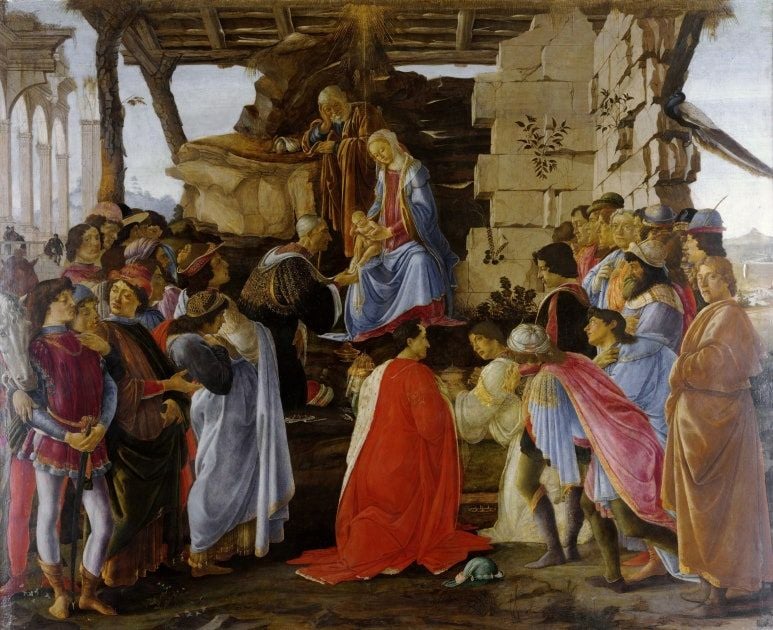
이 작품은 이탈리아 르네상스의 거장 산드로 보티첼리의 <동방박사의 경배>이다. 이 그림은 산타 마리아 노벨라 성당의 가스파레 디 자노 델 라마 예배당 제단화를 위해 제작된 것으로, 신약성경 마태복음에 등장하는 장면을 바탕으로 별을 따라 갓 태어난 예수를 찾아온 동방박사 세 사람의 이야기를 묘사하고 있다.
제단화의 중심에는 성모 마리아와 갓 태어난 예수 그리스도가 있으며, 그 뒤에는 성 요셉이 자리하고 있다. 그들 앞에는 신약성경에 등장하는 세 명의 동방박사가 무릎을 꿇고 아기 예수를 경배하는 모습이 그려져 있다. 세 동방박사는 예수에게 황금·유향·몰약을 예물로 바친다. 또한 하느님의 아들이라고 전해지는 아기를 보기 위해 모여든 많은 사람들이 주변을 둘러싸고 있다.
동방박사들이 가져온 세 가지 예물에는 각각 상징적 의미가 담겨 있다. 황금은 왕으로서의 예수를, 유향은 예수의 신성을 상징하며, 몰약은 장차 겪게 될 고난과 죽음을 예고하는 상징으로 해석된다.
이 작품의 가장 독특한 특징은 성경 속 인물들 대신 당대 피렌체의 실존 인물들이 등장한다는 점이다. 보티첼리는 당시 피렌체를 이끌던 메디치 가문의 인물들을 동방박사와 주변 인물의 모습으로 그려 넣었다. 또한 화면 오른쪽 가장자리에는 화가 산드로 보티첼리 자신의 자화상이 포함되어 있는 것으로 알려져 있다. 이러한 구성은 이 작품이 단순한 성경 이야기의 묘사를 넘어 메디치 가문을 기념하고 찬양하는 정치적·사회적 의미도 함께 지니고 있음을 보여준다.
그림의 시각적 특징을 살펴보면, 중앙의 무너진 건물 앞에는 새로운 시대의 탄생을 상징하는 성모 마리아와 아기 예수가 배치되어 있다. 그 뒤편에 보이는 폐허가 된 건축물은 옛 이교 세계의 몰락을 의미한다. 또한 주변 인물들이 반원형으로 둘러서도록 구성하여 관람자의 시선이 자연스럽게 중앙의 예수에게 집중되도록 했다.
현재 이 작품은 우피치 미술관(피렌체)에 소장되어 있다. 이 그림은 종교적 주제와 현실 인물의 결합, 인물 중심의 극적인 구성, 인간적인 감정 표현, 그리고 후원자인 메디치 가문의 정치적 상징을 함께 보여주는 작품으로 평가된다. 따라서 〈동방박사의 경배〉는 종교화이면서 동시에 르네상스 시대 피렌체 권력과 문화의 상징을 담은 작품이라 할 수 있다.
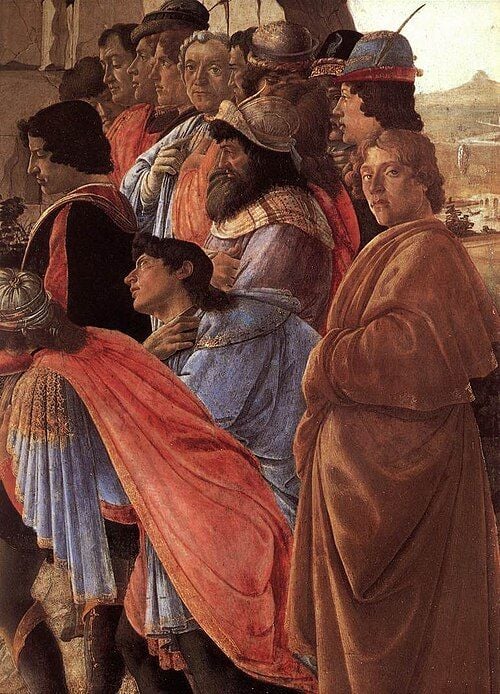
Adoration of the Magi by Santa Maria Novella
This work is Adoration of the Magi by the great Italian Renaissance master Sandro Botticelli. The painting was created as an altarpiece for the chapel of Gaspare di Zanobi del Lama in Santa Maria Novella. It depicts the biblical story from the New Testament Gospel of Matthew, portraying the three Magi who followed a star to find the newborn Jesus.
At the center of the altarpiece are the Virgin Mary and the infant Jesus Christ, with Saint Joseph standing behind them. In front of them, the three Magi from the New Testament are shown kneeling in reverence before the Christ child. They present their gifts of gold, frankincense, and myrrh. Surrounding them are numerous onlookers who have gathered to see the child believed to be the Son of God.
Each of the gifts brought by the Magi carries symbolic meaning. Gold represents Jesus as a king, frankincense symbolizes his divinity, and myrrh foreshadows the suffering and death he will later endure.
One of the most distinctive features of this painting is that, instead of only biblical figures, it includes real individuals from contemporary Florence. Botticelli portrayed members of the powerful Medici family, who dominated Florence at the time, in the roles of the Magi and other figures in the scene. It is also widely believed that Botticelli included a self-portrait of himself on the far right edge of the composition. This arrangement shows that the work goes beyond a simple biblical illustration and also serves as a political and social tribute to the Medici family.
From a visual perspective, the composition places the Virgin Mary and the infant Jesus—symbols of the birth of a new era—before the ruins of a collapsed structure. The ruined architecture behind them represents the decline of the old pagan world. The surrounding figures are arranged in a semicircle, guiding the viewer’s gaze naturally toward the central figure of Christ.
Today, the painting is housed in the Uffizi Gallery in Florence. The work exemplifies key characteristics of Renaissance art, including the fusion of religious subject matter with contemporary figures, a dramatic composition centered on human presence, expressive emotional portrayal, and the political symbolism associated with its patrons, the Medici family. Thus, Adoration of the Magi can be understood not only as a religious painting but also as a work that embodies the power and cultural identity of Renaissance Florence.
