



[토마스의 그림이야기 55] 사이보그 W7 _ 이블
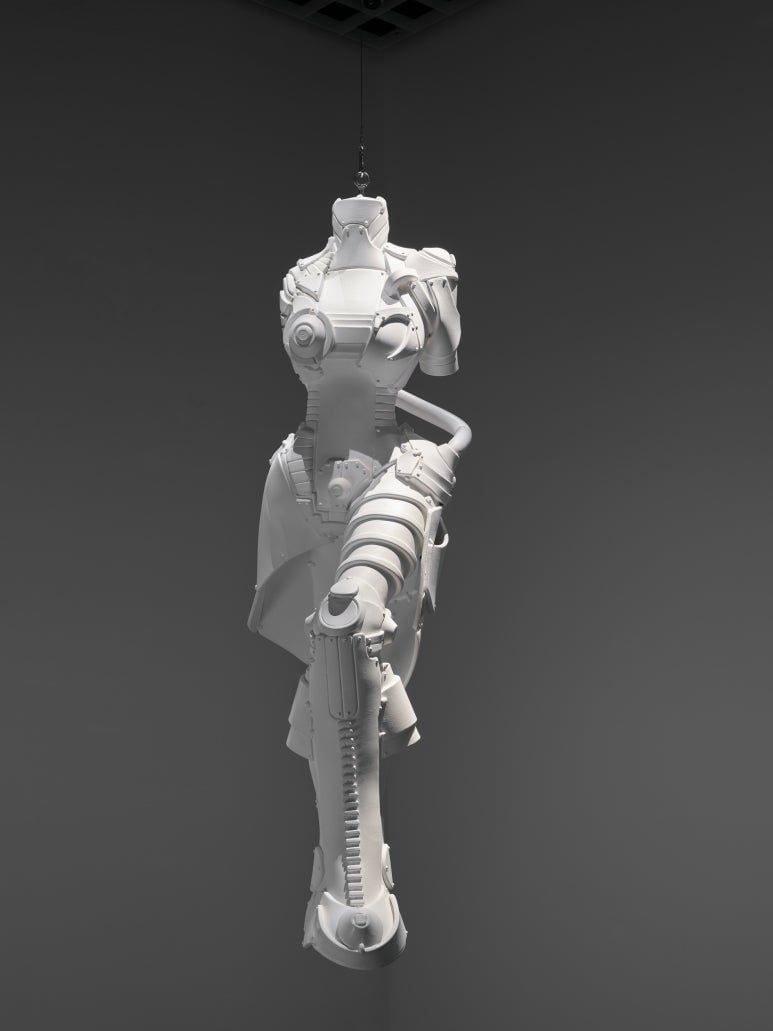
이 작품은 이불(Lee Bul)의 〈Cyborg W7〉로, 작가의 대표적인 사이보그 연작(Cyborg Series) 가운데서도 포스트휴먼 누드(Posthuman Nude)의 개념을 가장 응축적으로 보여주는 작품이다.
포스트휴먼 누드는 전통 미술에서 이상화된 ‘완전한 인간의 몸’으로서의 누드를 넘어, 기술·권력·정체성·환경 변화 속에서 재구성된 신체를 다루는 동시대 미술의 개념이다. 고전 누드가 비례와 조화, 완전성을 통해 인간을 중심에 두었다면, 포스트휴먼 누드는 결손·변형·혼성을 통해 인간 중심적 사고를 해체한다. 이때 몸은 더 이상 감상의 대상이 아니라, 사유와 질문이 발생하는 장으로 전환된다.
포스트휴먼 누드에서 신체는 완성된 존재가 아니라 진행 중이며 불안정한 상태로 제시된다. 사이보그, 인공 피부, 금속과 실리콘 같은 산업 재료는 인간과 기계의 경계가 붕괴된 몸을 상징하며, 기술이 인간을 확장하는 동시에 침식하고 통제하는 양가적 현실을 드러낸다. 또한 성별은 모호해지거나 제거되며, 이는 남성/여성, 정상/비정상이라는 이분법적 규범에 대한 비판으로 작동한다. 전통 누드가 ‘보는 몸’이었다면, 포스트휴먼 누드는 생각하게 만드는 몸이다.
이불은 한국 현대미술을 세계 무대에 올려놓은 대표 작가 중 한 명이다. 서울대학교 미술대학 조소과를 졸업했으나, 전통적인 조각 언어와 아카데믹한 형식에 강한 거부감을 보이며 이를 스스로 해체해 왔다. 본명은 이은선이며, ‘이불’이라는 활동명은 일상적이고 사적인 물건을 연상시키는데, 이는 훗날 그녀가 몸, 노출, 취약성, 사적인 영역을 주요 주제로 다루는 태도와도 긴밀히 연결된다. 그녀는 베니스 비엔날레, 테이트 모던, MoMA 등 주요 국제 미술관에서 소개되며, 사이보그와 불완전한 몸, 포스트휴먼 누드를 중심으로 독보적인 위치를 확립해 왔다.
〈Cyborg W7〉은 레진, 실리콘, 유리섬유, 금속, 페인트 등을 사용한 인체 크기의 입체 조각으로, 여성의 나체를 연상시키는 형상을 기본으로 한다. 그러나 이 몸은 우리가 익숙한 ‘완전한 인체’와는 분명히 다르다. 팔이나 다리가 결손되어 있고, 얼굴은 제거되거나 익명화되어 있으며, 근육과 피부 대신 매끈한 인공 표면이 신체를 덮고 있다. 성적 특징은 남아 있지만 에로티시즘은 철저히 배제되어, 아름다움과 불안, 매혹과 불편함이 동시에 공존한다.
이불에게 사이보그는 SF적 환상이 아니라 근대 유토피아의 붕괴를 상징하는 형상이다. 과학은 인간을 구원하지 못했고, 진보는 더 큰 소외를 낳았으며, 기술은 완전함이 아닌 결손을 만들어냈다는 인식이 이 작품에 내재되어 있다. 결국 〈Cyborg W7〉은 완전한 미래를 약속했던 기술과 이상이 불완전한 인간의 몸으로 귀결되었음을 드러내는 포스트휴먼 누드로 읽힌다.
Cyborg W7 by Lee Bul
This work, 〈Cyborg W7〉 by Lee Bul, is one of the most condensed and representative examples of the concept of the Posthuman Nude within the artist’s renowned Cyborg Series.
The posthuman nude moves beyond the traditional idealization of the “perfect human body” found in classical art, addressing instead bodies that are reconstructed through technology, power, identity, and environmental change. While classical nudes placed humanity at the center through proportion, harmony, and completeness, the posthuman nude dismantles anthropocentric thinking through absence, mutation, and hybridity. In this context, the body is no longer merely an object of visual appreciation but becomes a site of reflection and critical inquiry.
Within the framework of the posthuman nude, the body is presented not as a finished entity but as a processual and unstable state. Cyborgs, artificial skin, and industrial materials such as metal and silicone symbolize bodies in which the boundary between human and machine has collapsed, reflecting the ambivalent reality in which technology simultaneously expands, erodes, and controls human existence. Gender is often rendered ambiguous or erased, functioning as a critique of binary norms such as male/female and normal/abnormal. Whereas the traditional nude was a body to be seen, the posthuman nude is a body that demands thought.
Lee Bul is one of the most internationally recognized figures in contemporary Korean art. Although she graduated from the Department of Sculpture at Seoul National University, she has consistently resisted traditional sculptural language and academic conventions, actively dismantling them within her practice. Born Lee Eun-sun, her adopted name “Lee Bul” evokes something everyday and private, a resonance that aligns closely with her sustained engagement with themes of the body, exposure, vulnerability, and intimacy. Her work has been exhibited at major international institutions, including the Venice Biennale, Tate Modern, and the Museum of Modern Art (MoMA), where she has established a singular position through her sustained exploration of cyborgs, incomplete bodies, and the posthuman nude.
〈Cyborg W7〉 is a life-sized sculptural work made from resin, silicone, fiberglass, metal, and paint. While its form recalls the female nude, it diverges sharply from the familiar image of the “complete” human body. Limbs are severed or absent, the face is removed or anonymized, and smooth artificial surfaces replace flesh and muscle. Sexual characteristics remain visible, yet eroticism is rigorously excluded, creating a body in which beauty and unease, allure and discomfort, coexist.
For Lee Bul, the cyborg is not a science-fiction fantasy but a symbol of the collapse of modern utopian ideals. Embedded in 〈Cyborg W7〉 is the recognition that science failed to redeem humanity, progress generated deeper alienation, and technology produced not perfection but fragmentation. Ultimately, this work can be read as a posthuman nude that reveals how the promises of a perfected future have culminated instead in the incomplete and vulnerable human body.
